Organic Transistors for Neuromorphic Inspired Computing: Sensing and Neural Image Recognition Networks
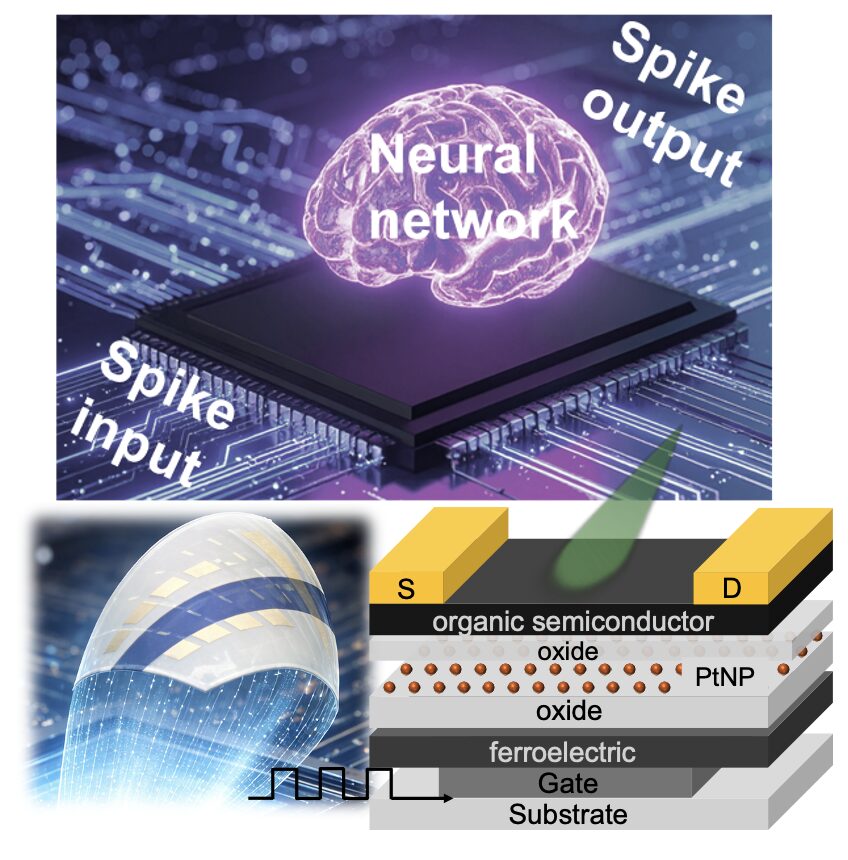

Abstract: The current trajectory of AI, driven by ever-larger cloud models and data centers, is not sustainable in terms of energy, water, and infrastructure cost. Neuromorphic computing has emerged as a promising pathway to overcome the von Neumann bottleneck, enabling in-memory computations through parallel processing and adaptive learning while being highly energy efficient. To overcome the limitations of traditional computing, we focus on three-terminal transistors based on organic semiconductors which offer unique advantages in artificial synaptic devices due to their low temperature processing, mechanical flexibility, biocompatibility, and low power consumption. We are currently developing nanoparticle embedded organic ferroelectric transistors for multi-level operation with dual electrical and optical programmability along with sensing capabilities. Our goal is to scale up the process to transistor arrays for the development of next-generation computing via sensing and image recognition networks along with real-world field testing.
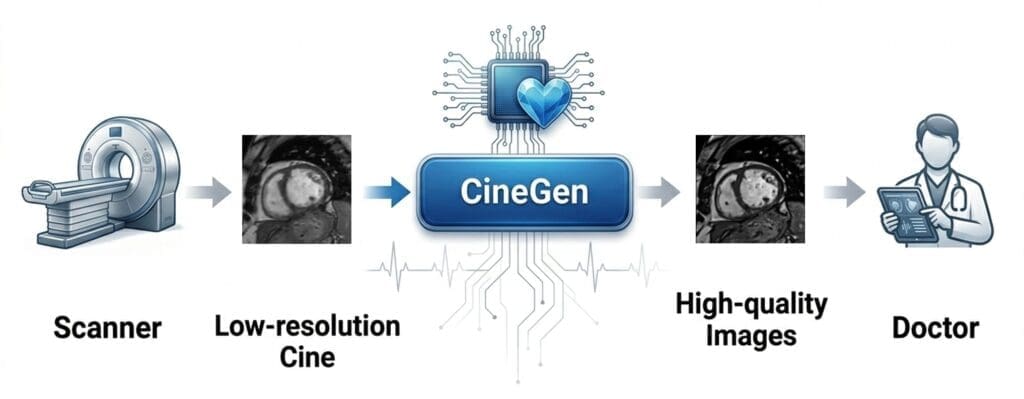
Abstract: Free-breathing real-time cine MRI has the potential to transform cardiac MRI by enabling single-heartbeat imaging without breath-holding, thereby improving imaging feasibility for patients with arrhythmias, heart failure, lung disease, pediatric patients, and others with limited breath-hold capacity. However, current real-time cine acquisitions remain constrained by a fundamental tradeoff among spatial resolution, temporal resolution, contrast, signal-to-noise ratio, and artifact control, particularly under highly accelerated acquisition conditions. Although generative AI methods can recover high-frequency anatomical details and enhance image quality from low-resolution or undersampled images, diffusion-based models remain computationally inefficient and too slow for inline deployment on clinical MRI scanners. This project will advance CineGen, a fast conditional flow-matching generative image enhancement framework designed to reconstruct high-quality real-time cine MRI directly within the scanner workflow.
CineGen will be optimized and integrated into the Siemens FIRE framework to enable inline image enhancement from highly accelerated free-breathing real-time cine acquisitions. The project will expand retrospective and prospective cardiac MRI datasets, optimize the conditional flow-matching model for rapid inline reconstruction, and validate performance against standard breath-hold cine MRI, compressed sensing reconstruction, and existing AI-enhancement approaches. Preliminary results demonstrate that CineGen can generate approximately 21-fold accelerated enhanced cine images with improved myocardial border sharpness, enhanced blood–myocardium contrast, and image quality comparable to conventional breath-hold cine MRI. Importantly, CineGen overcomes key latency barriers associated with diffusion models and supports inline execution on scanner-compatible reconstruction infrastructure.
Successful completion of this project will establish the first inline flow-matching generative AI image-enhancement framework for real-time cardiac cine MRI and advance CineGen toward commercial deployment through scanner-vendor integration, cardiac MRI software partnerships, and adoption within existing clinical MRI practice. By enabling high-quality, single-heartbeat cine imaging without protocol changes, contrast agents, or new scanner hardware, CineGen has the potential to improve diagnostic confidence, reduce repeat acquisitions, enhance MRI workflow efficiency, and support a scalable commercialization pathway for AI-driven cardiovascular MRI reconstruction.
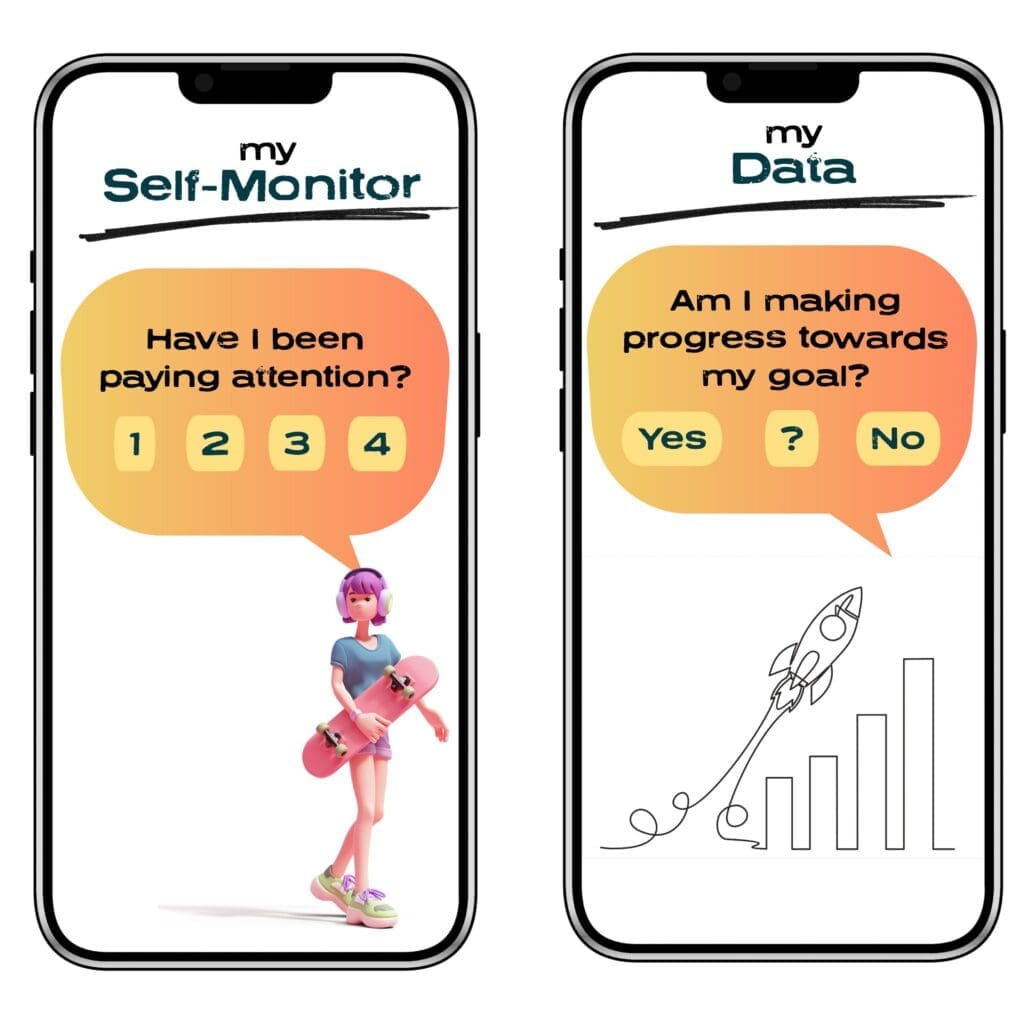
Abstract: Chronic social, emotional, and behavioral (SEB) needs can cause a host of negative school outcomes for students with disabilities and those at risk for school failure, including poor academic achievement, personal wellbeing, graduation rates, and post-school success (Freeman et al., 2019). A promising strategy to improve SEB outcomes and address the implementation barriers present for self-monitoring interventions is inviting students to actively participate in intervention decision-making, or co-designing self-monitoring interventions with students. We propose to develop the Self-Management Suite webapp software that will enable students to design and implement their own self-management intervention and provide data to stakeholders for progress monitoring and data-based decision making. Specifically, with our software, students will be able to: (a) establish specific and measurable SEB goals, (b) design a SEB self-monitoring plan to promote goal attainment, and (c) self-evaluate goal progress with their self-monitoring data. To date, no software exists that is designed for students to actively participate in designing and implementing their own SEB self-management intervention.